One for the Earth

No day passes without news about the endless reckless pillage of the resources of the single planet that currently sustains life. And while that wanton destruction can be gut-wrenchingly painful, I am glad that we have set aside areas for protecting for the future generation. It requires a foresight for selflessness that is hard to find in a society that values short term gains over long term prudence. Let Earth day be a reminder to appreciate this clairvoyance and sense of conservation.

After all, we have but one Earth. Lets take one for the planet. Donate to your favorite earth-friendly non-profit, volunteer with your local charities, or do one little act that will help preserve the delicate balance of nature.

Sabrina Lake Basin

Bishop CA
Leave No Trace

As spring slowly transitions to summer, snow caps high in the Cascades will start to melt away and reveal beautiful alpine landscapes. And for a short span of 90 days, this fragile terrain will be host to not just thousands of eager hikers seeking out sublime vistas, but also delicate alpine flora and fauna, including feeble yet colorful plants that have to grow, bloom, pollinate, seed, and die in that short burst of summer, and hungry animals that have to fatten up for the next hibernation cycle.

So the next time you are exploring the high Cascades, remember to follow the Leave No Trace principles. This simple step will ensure that this natural beauty, such as this scene in Mt. Baker-Snoqualmie National Forest, is preserved for generations to come.

Mt. Baker-Snoqualmie National Forest

WA USA

The Season of Love

While passionate lovers and marketing experts for large retail firms will claim that February is the month of love, for the vast majority of species on the planet, March and April, in the heart of the spring, truly represents the season of love. Millions of flowers from hundreds of plant species bloom in an extravaganza of colors hoping to attract pollinators, and pass on their gene to the future generations.

This visual spectacle, under the right weather conditions, can transform a dry and dusty landscape into drapery of contrasting colors; vast fields of yellow, pink, orange, purple and blue stretch on and onto the endless horizon of the vast desert landscape. While such displays were much more common in the past, changing weather conditions and human impact have definitely reduced the scale of such a tableau. Witnessing such a bloom can definitely make one marvel at nature's creation, and instill a sense of conservation.

Table Mountain State Ecological Reserve

CA USA

Fragility

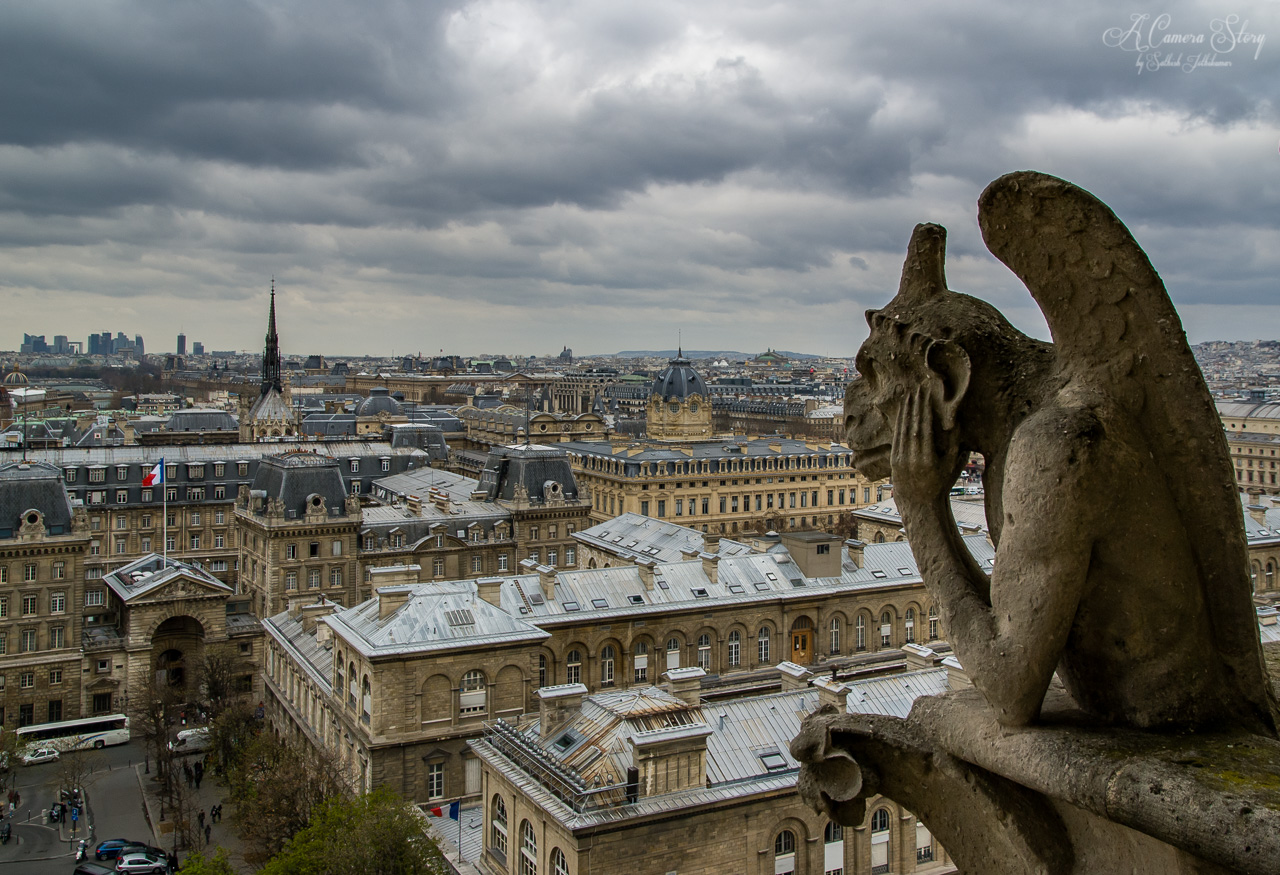
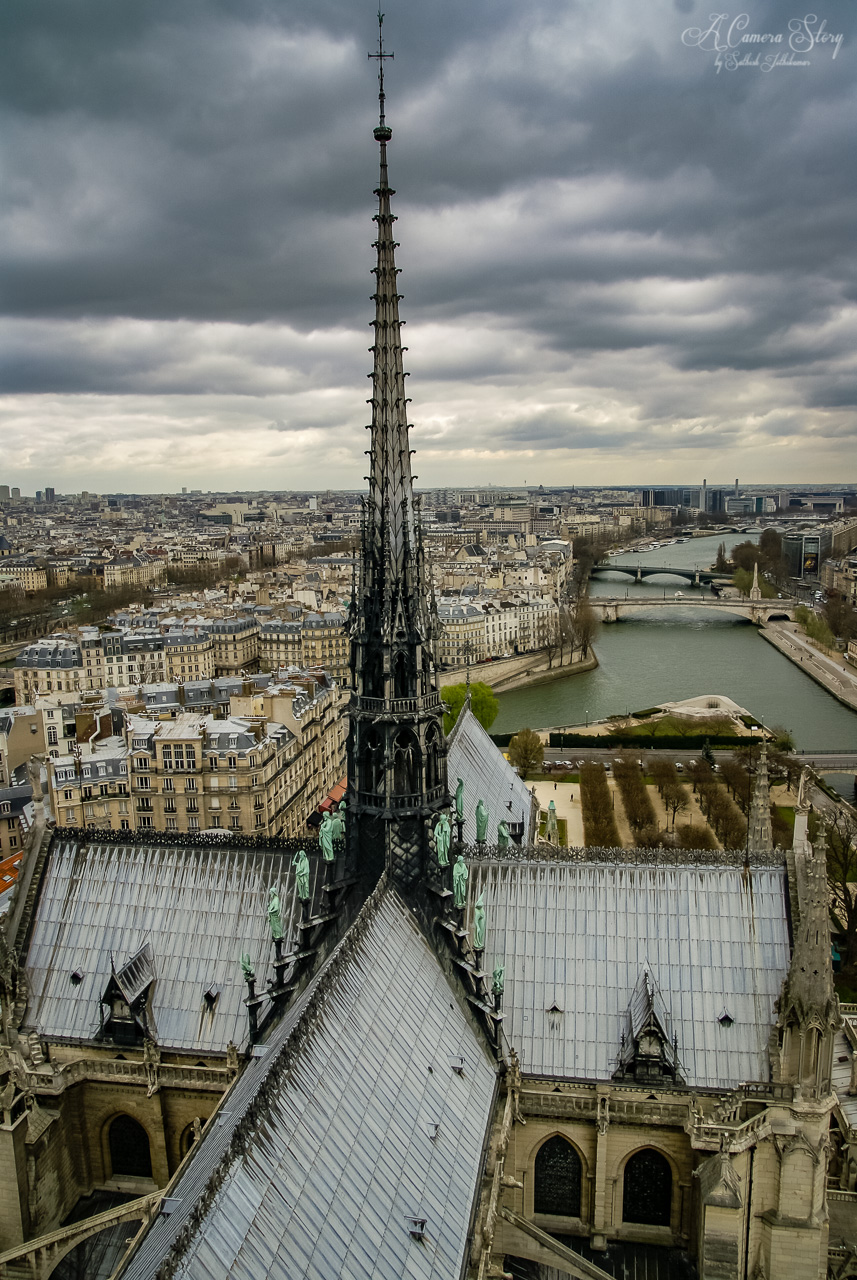
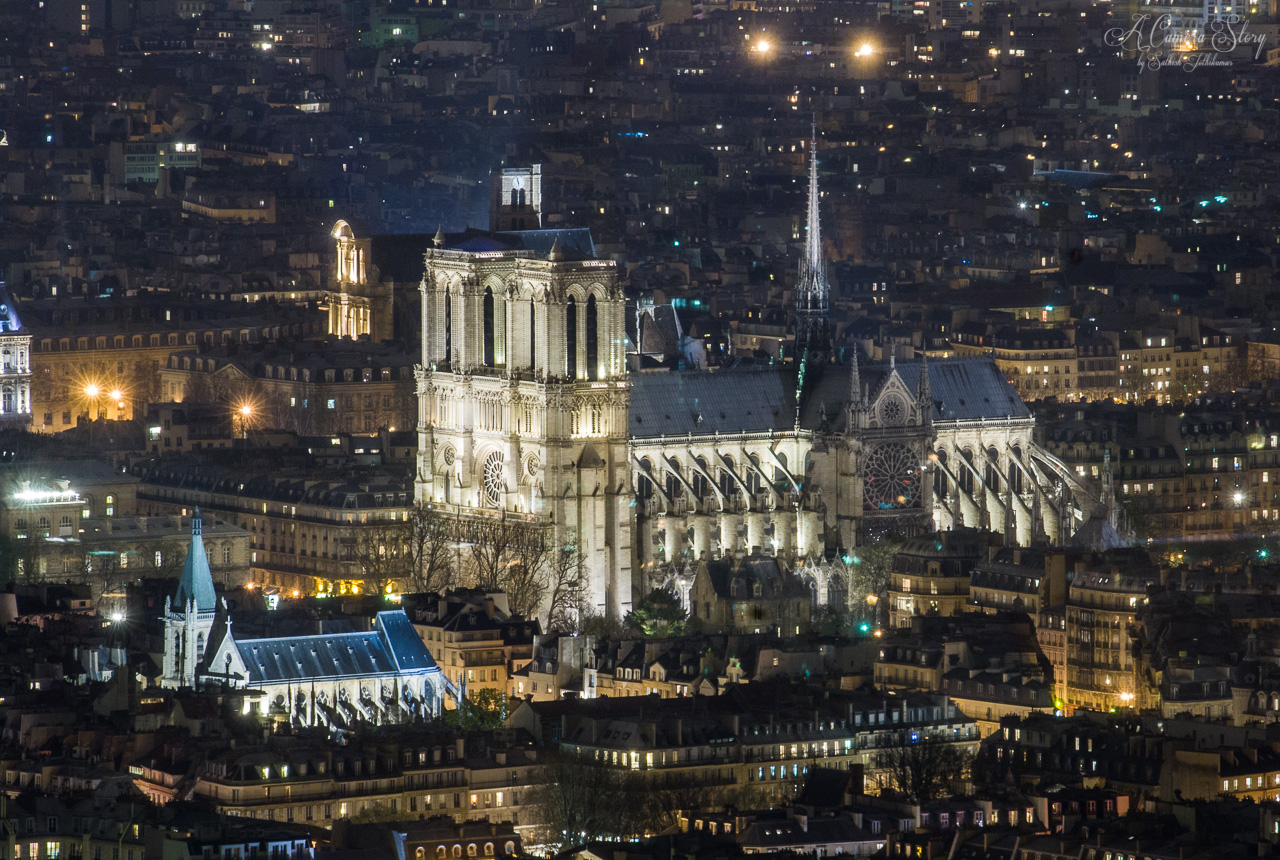
It is a tragedy that has befallen this mighty building.

The Notre Dame captured my heart the very moment I saw pictures of it while looking at the Paris guidebooks. And when I visited this impressive piece of history 10 years ago, I couldn't contain my excitement.

Even from afar, the Notre Dame Cathedral is an imposing structure: two tall towers rising 70m above the mass of low-rise buildings that dominate the center of Paris, behind which the lie the cross of the 73m long nave and 46m wide transept, each rising 4 stories, and supported by the massive bulwarks of the flying buttresses. Even the spindly spire that collapsed was large from up-close.

It took 100 years to build, and it stood through 800 years of tumultuous history, through both the World Wars. And yet, even such a mighty structure can be fragile. I do hope they rebuild it to its former glory.

Paris

France

In Search of Tulips

Spring has arrived, but the Pacific Northwest hasn't been informed of it. Cold damp conditions continue to persist, and sunlight barely manages to peek out through the dense cloud cover. The long halcyon days of warm sunshine that took over a few weeks ago seems to have gone back to hibernation mode, a cue that up in the mountainous Northwest, cold unpredictable weather is always around the corner.

I went around in search of colorful tulip fields of Skagit Valley opening up their buds to the embracing grace of morning light, but that was not to be. The reversal of the weather fortunes seem to have delayed the opening by a few more days. This image from last year was what I was hoping to find this year, but I never made it.

Skagit County

WA USA

A Blue Oasis

I stepped away from the main thoroughfare of Chefchaouen, a long wide alley lined with shops selling tourist curios and colorful spices that wound its way through the dense hillside town. The alleys were crowded with early spring tourists and residents going about their daily routines, and I wanted to explore the more remote parts of this village. The blues continued on however, a never-ending fabric of paint that coated the city.

Chefchaouen was this magical oasis of blue in the brown dusty hill-slopes in north-eastern Morocco. The medina had gained its blue hues in the late 15th century as it received its first influx of Jewish migrants, and it stuck to this ever since. And the blues doesn't feel overwhelming, as the subtleties in the different shades of blue ensure that one alley looks different from the other. One would be hard-pressed to escape from the blue until you step out of the medina, but there are spots where the underlying brown bricks become visible, as it was in this narrow residential alleyway, complete with a tall ladder also painted blue.

Chefchaouen

Morocco

The Gold Tomb

Not many of us are honored enough to enjoy an afterlife in a gold tombstone. But if you were Amir Timur, the Turco-Mongol conqueror and the founder of the Timurid empire of Persia and Central Asia in the 14th century, you are definitely worthy of that honor. This beautiful mausoleum in Samarkhand, the capital of the emperor's empure, is a precursor to the great tombs of the Mughal era, including the famous Taj Mahal in India.

Walking inside, what struck me were the ornate decorations, the colorful mosaics, gold filigree and the beautiful inlaid tiles reflecting the rich hues the empire brought together in its vast and storied history. It must have certainly been a wonder in the era it was built. And even though it fell to disrepair during the 17th and 18th century, it has been dutifully restored during the Soviet era, almost back to its original glory.

This tomb, while being overshadowed by the even more famous attractions in Samarkhand, is one of the many reasons to visit this city steeped in history.

Samarkhand

Uzbekistan

Sunstars

While a part of my weekend time is spent looking at my photo archives for jogging my memories, a part of it is also spent gathering inspiration for future travel. And sometimes, looking at my archives can motivate me to seek new destinations.

This was one such archival set - a backpack I did into the coastal range of British Columbia into the heart of Garibaldi Provincial Park. While exploring opportunities to shoot by the lake at sunset, I found a small patch of fireweed catching the fire of the last light. This inspired me to start booking backpacking trips in this beautiful part of Cascadia.

Garibaldi Provincial Park

BC Canada

Morning by the lake

I could see my own breath condensing in the fresh cold air. The faint October sun had still not penetrated the towering peaks and deep valleys, leaving me shivering even with the layers I had adorned. Across the lake, the fringes of the conifers caught this cold morning light, glowing with a vibrant gold color.

All around, the morning forest was waking up. A thick scent of mountain pine and earthy tones permeated around. Songbirds, eagerly awaiting their winter migration, started their wake-up calls. And a lone kayaker took off from the tiny dock, hoping to get a lucky catch. This poignant scene lasted for but a moment. The roaring sounds of a dozen vehicles soon echoed through the valley - early morning hikers eagerly dashing off to the trailhead on a beautiful fall day in the North Cascades National Park.

I am eagerly awaiting the summer hiking season in this gem of a National Park so close to home.

North Cascades National Park

WA USA

The high and the low

The journey from the highest point in Death Valley to its lowest point spans ~11,300ft or ~3,450m. That journey takes one from the freezing snow-capped peak of the Panamint range to through rocky canyons down through the alluvial fans onto the lowest point in the lower 48 states - 250ft below sea level. And being able to witness this gradual transition of altitude, terrain, and climate, in one single glance is not possible anywhere else except at Dante's View in Death Valley National Park

I had arrived at the 5,500ft summit of Dante's view at sunrise, hoping to witness the first light on the mighty spine of the Panamint range. And after a colorful sunrise, pockets of warm light began to shine on the dynamic terrain of the Badwater basin and the stunning landscape all around. This was one such view capturing a well-lit alluvial fan that drained the Panamint range behind a hardy shrub that survives the harsh climate of Death Valley.

Death Valley National Park

CA USA