

As the bush plane flew low over the marshes and swamps adjoining the Kobuk river, I was left to wonder when this terrain would take on a desert appearance to support sand dunes. It never did - the marshes, interspersed with boreal spruce forests that was cut by meandering waters of the wide Kobuk river, continued endlessly until suddenly it just became sand. 4x4 and snowmobile tracks in the marsh suddenly disappeared. After that, it was just miles of endless sand.
That abrupt transition between forests and waterbodies and sand-dunes were features I experienced at multiple places in the park, and that juxtaposition was just shocking how many ever times I looked at it. And the transition zone was a timeless battle between the advancing forests and the advancing dunes, and who lost or won was just decided by precipitation and prevailing winds. The one constant was the mosquitoes, they were relentless in these transition zones.
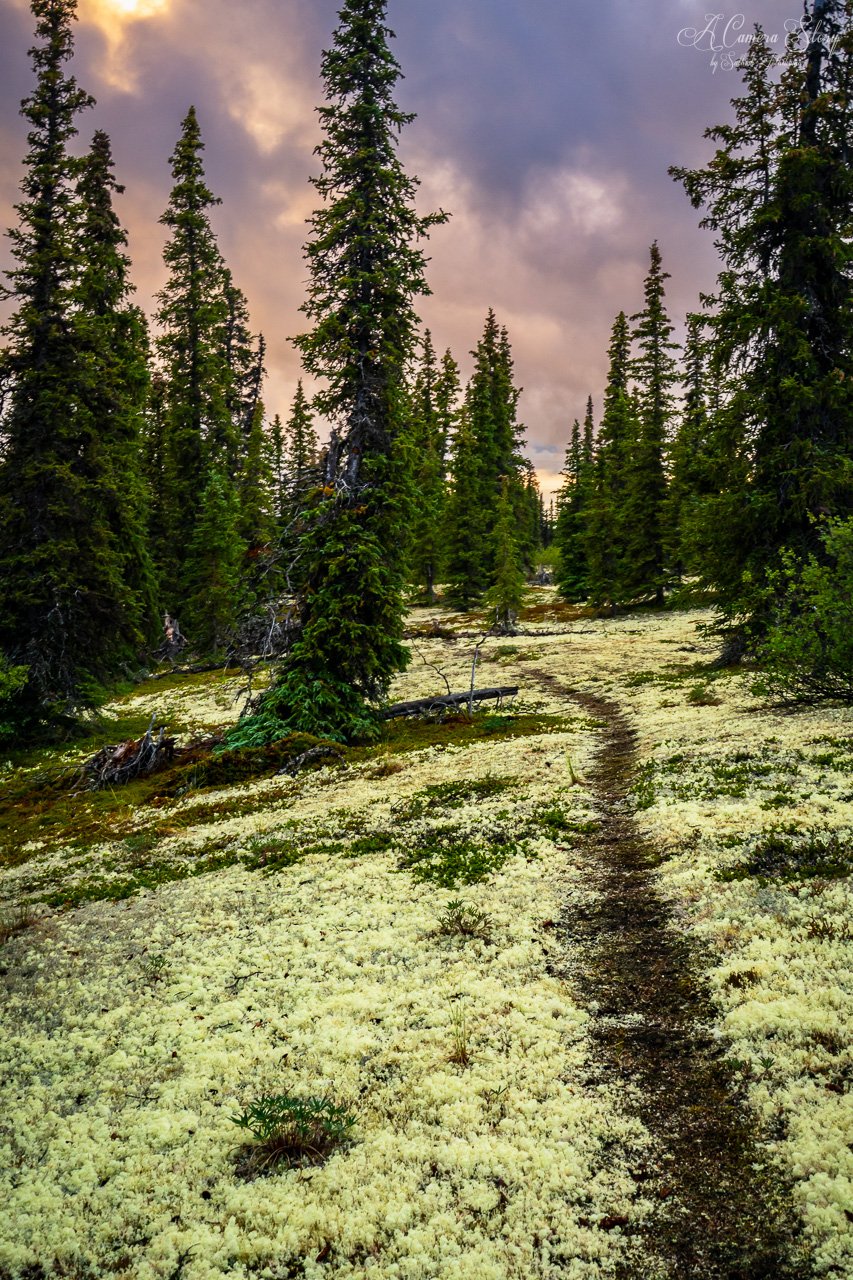
One spot on the transition zone features these beautiful lime-green reindeer lichen that carpeted the forest floor. In the late evening (11pm) light, they had a light fluorescent glow unlike anything else I had seen.
Kobuk Valley National Park
AK USA
Amidst the Granite Walls
Park # 61 - Gates of the Arctic National Park
The Gates is a massive park situated entirely within the Arctic circle in Alaska, characterized by a long (but not very tall) ranges running east to west along the Continental Divide, and forming the border between the boreal and tundra climactic zones. Its wilderness experience is unparalleled, next to only the Arctic National Wildlife Refuge. There are valleys in this where one could spend days without meeting another soul or witnessing any signs of civilization.
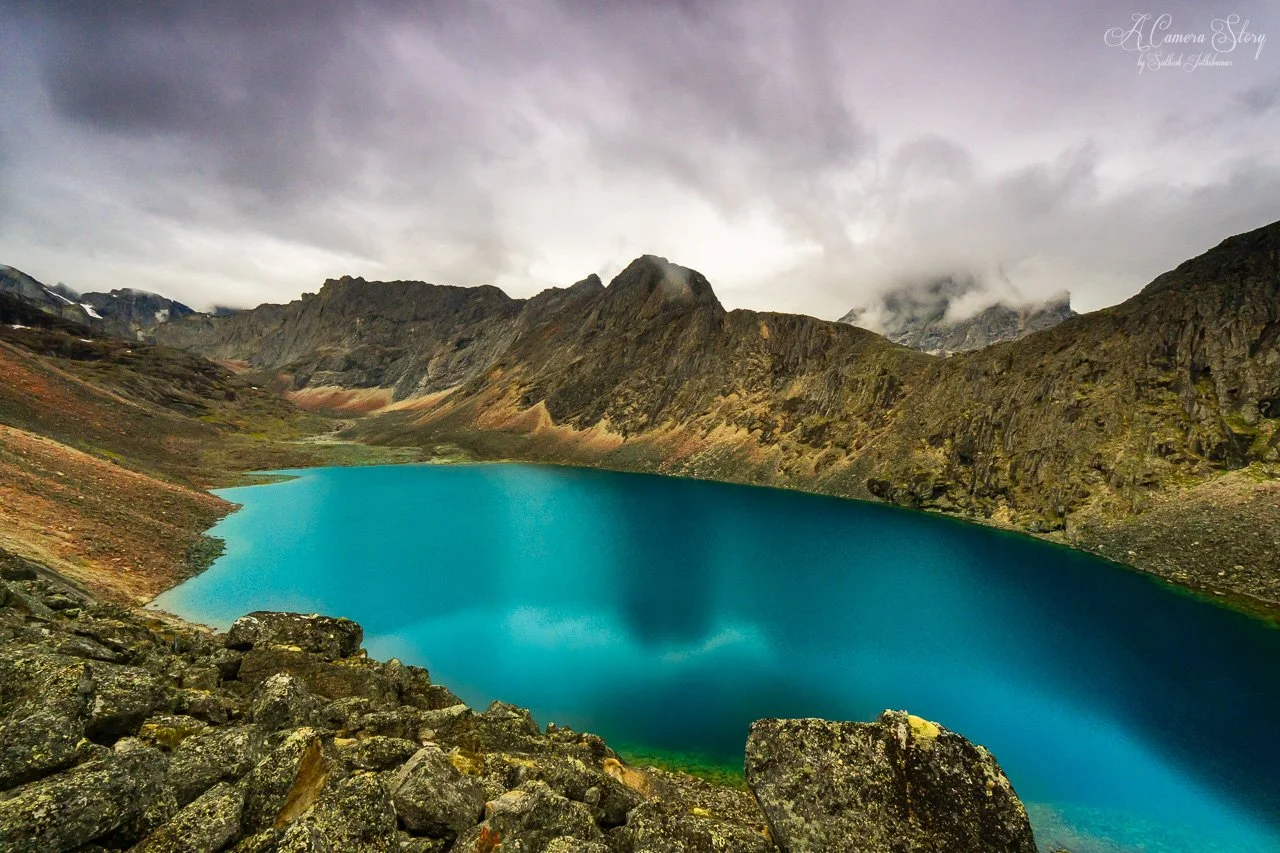
I chose to skip all that and visit the Arrigetch region of the Gates - known for its towering granite peaks with dramatic names such as Caliban, Xanadu, Elephant's tooth (given by climbers, of course). It is one of the most heavily visited areas of the park, so much so that there is even a very walkable climbers trail going up the valley. Despite that, it was challenging, and amazingly beautiful, especially when the weather cooperated.
Having explored this, it is certainly one of the parks I want to come back to explore some of it's more remote corners, of which there are so many.
Gates of the Arctic National Park
AK USA
Wild Alaska
The Alaskan arctic is probably one of the last unexplored frontiers for me. The rugged terrain, unpredictable weather, and a short season, coupled with mosquitoes swarming during the prime hiking season means that it is not on the top of my bucket list. The cost and difficulty in getting there compounds the inertia to visit it. But the last two National Parks on my list lie in the arctic, and that was needed incentive to overcome the inertia.
I expect the landscape to look a lot like the above, with rugged mountains rising above vast glaciated valleys that are filled with marsh, tussock and alder making it a challenge to walk through. Add in a few freezing river crossings too. It is going to be an interesting experience, and hopefully a rewarding one.
Wrangell St. Elias National Park
AK USA
Superior Hues
My National Park #60 - Isle Royale in Michigan.
Even though I had spent a couple of years in Michigan more than a decade ago, I never got around to this Island over Lake Superior. Stuck in the extreme northwest corner of the state, getting here involved a 9hr drive and a 3hr ferry to get the largest island in the middle of the largest freshwater lake in the world. And that wasn't a luxury I could afford during my time in Michigan a decade ago.
Fast forward to 2026, and I finally got around to visiting this gem of a park. The difficulty in getting there made the journey and beauty even more memorable. Sublime sunrises and serene sunsets met me every day. These were accompanied by the haunting sirens of the common loon that echoed over the vast surface of the still lake. The crystal clear waters of the lake beckoned me to its freezing embrace on the warm summer afternoons as a respite from the swarms of mosquitoes and blackflies.
Nearly a month after the trip, and I still hear the siren of the loon, feel the cold lake lapping on my feet and smell the watery undertones of Lake Superior.
Isle Royale National Park
MI USA
Smoky Layers
Landscape photography often challenges us to simplify complex scenes by carefully selecting key visual elements and controlling color and tonal range. In this image of Mt. Adams, shot from Mount Rainier, I focused on isolating the interlocking ridges to create a layered composition that emphasizes depth through atmospheric perspective.
The cool blue hues and gradual tonal shifts highlight the receding mountain layers, while the smoke from a nearby fire introduced additional haze, enhancing the sense of scale and distance through diffused light scattering. Typically, this effect is captured during the golden hours of early morning or late evening, but the smoke uniquely extended that window, adding mood and texture to the frame.
It’s a reminder of how environmental conditions can become creative tools in landscape photography.
Mount Rainier National Park
WA USA
A Blissful State
I always build time into my hike for a moment of self reflections. Being so high in the mountains, where the air is thin, and views stretch for miles, offers one a wonderful opportunity for slowing down, and evaluating not only oneself, but the life around them. Whether it be spending the moment to take in the scenery and admire nature, or to introspect about your part in the wider community, the moment of zen is critical to appreciating the reason to get outdoors. Even if you are with friends, it pays to take time off to de-stress in nature
Here was a group doing this high in the Cascades.
North Cascades National Park
WA USA
A Slow Winter
The winter weather in the PNW has been a mixed bag so far. Freezing conditions with light precipitation, followed by much milder conditions and moderate precipitation. Neither are great for catching the classic winter landscapes of the PNW.
So here is one from an earlier time when the winter weather actually followed through, and thoughtfully provided a gap during a weekend to catch the powder.
Mount Rainier National Park
WA USA
Still Waters
As the kayak drifted slowly through the shallow waters of Cedar creek, I passed by baldcypress trees with their broad ribs and towering tupelo trees cradling the riverbank. The morning light of late fall lit up the faded yellows and orange of the swamp cottonwoods. The still waters of the creek created a sublime and moving reflection of the entire scene. The gentle chorus of songbirds as they were starting their morning flight echoed throughout the forest.
The everchanging pattern of colors, light and sound captured, in my mind, the essence of Congaree National Park, which preserves the last old-growth bottomland hardwood forest in the United States. This scene from Cedar creek in the National Park is the featured image for November in my 2024 calendar available at this link.
Congaree National Park
SC USA
Starlight magic
The transformation of the PNW in the summer is a sight to behold. Snow-covered winter landscapes become sun-drenched. Long nights transform to long days. And dreary grey days are replaced with a beautiful tapestry of sunlight during the day and a bejeweled carpet of stars at night. For long, I had visualized, in my minds eye, of a scene where the bright arc of the Milky Way draws out over the snow-capped summit of Mt Rainier while streaks of a meteor show dazzle in a starry spectacle.
This image, featured in the July month of my 2024 calendar, is a realization of such a scene. You can purchase my 2024 calendar at this link.
Mount Rainier National Park
WA USA
Novarupta
While the term Katmai National Park conjures up images of Fat Bear Week and of gluttonous grizzles gorging on salmon, I found the volcanic wastelands of the Valley of Ten Thousand Smokes far more fascinating. The eruption of the Novarupta volcano which deposited hundreds of feet of ash on this vast valley took place in 1912, and it was the largest eruption of the 20th century. Though news of this eruption was overshadowed by an even more titanic disaster, the sinking of the Titanic.
Hiking into this remote valley left me with an itch to explore more of this unique landscape someday.
As before, you can buy this calendar at this link.
Katmai National Park
AK USA