oregon

Falling to Winter

Time is the one true constant—an invisible current that carries us forward, whether we’re ready or not. It’s the most honest measure of what we value: the hours we devote to work, the moments we share with loved ones, the days we steal away to travel and explore. Yet once spent, time is irretrievable. And as we age, its pace seems to quicken, propelling us ever faster toward the inevitable horizon.

In this digital age, one of the greatest thieves of time is doom-scrolling. I’ve succumbed to it more often than I’d like to admit—a habit I wrestle with, especially as the world around me slips by in fleeting seasons. The spring wildflowers I wandered among feel like they bloomed just yesterday, their colors still vivid in my memory. Summer hikes and backpacking adventures seem only moments ago. The joy of autumn’s fiery foliage still lingers. And tomorrow, surely, will be winter. The cycle spins faster now, each turn of the wheel a blur.

Sometimes I long to return—to the wide-eyed wonder of my teens, the boundless optimism of my twenties, the memory-rich tapestry of my thirties. But time doesn’t rewind. All I can do is move forward, carried by its current, hoping to make each moment count before it too becomes a memory.

Oregon
USA
Cascades in the Gorge

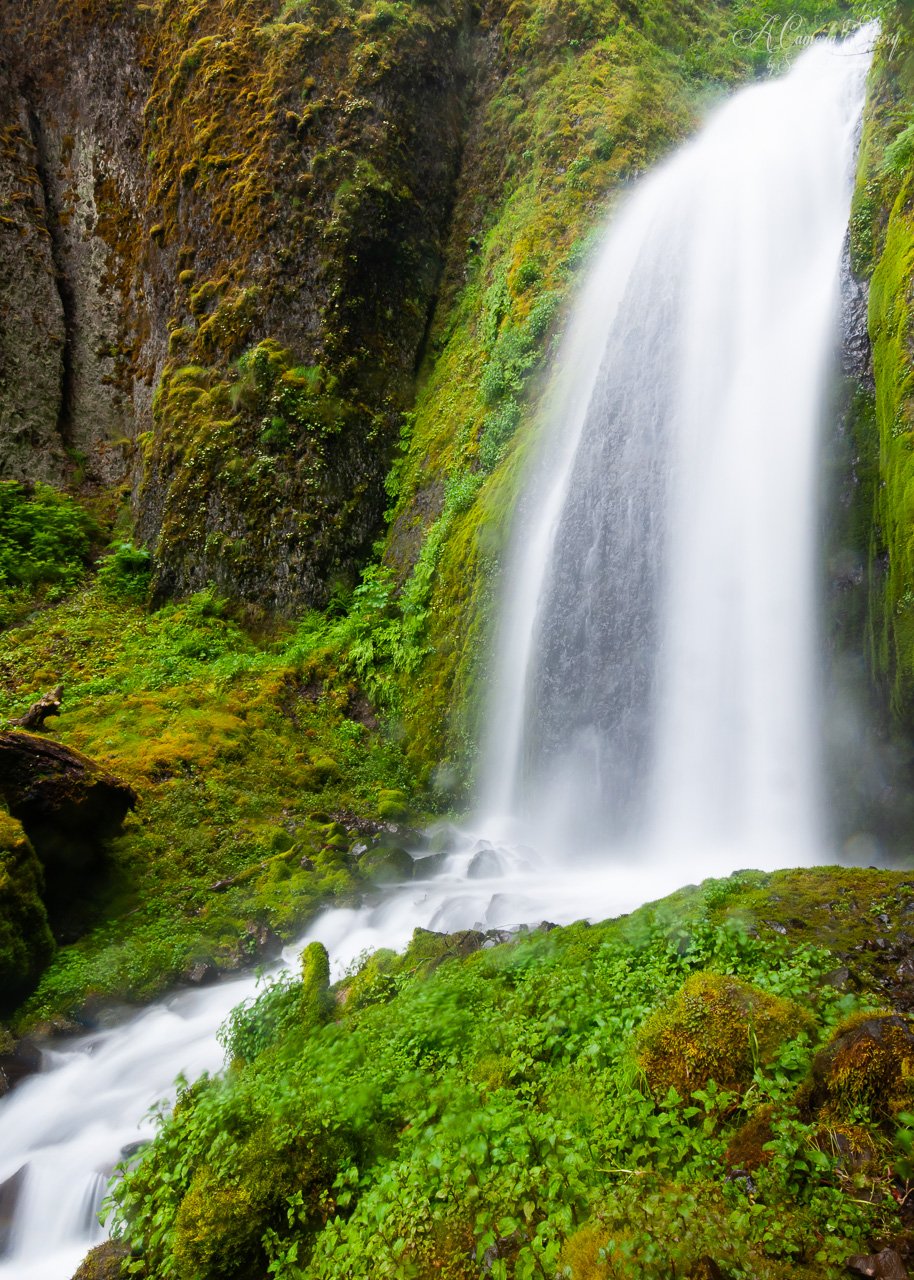
Watching the delicate dance of water as it winds its way down moss-clad rocks, or arc over a ledge in a beautiful waterfall, or spread into a million droplets of refreshing mist, is perhaps the surest sign of spring. The cool air was alive with the scent of damp earth and wildflowers, a fragrant reminder that life persists even in the hidden corner of the forest. It hearkens back to an era of unspoilt nature far away from civilization.

Here are a few scenes from the Columbia River Gorge, noted for its amazing variety of wildflowers which tumble down the steep slopes of the Gorge

Columbia River Gorge 
OR USA

Watered Down

I was quite surprised when I learnt that the state of Washington may have the largest number of waterfalls in the lower 48, including this icy falls near Snoqualmie Pass, but I reckon that the most beautiful falls in the Pacific Northwest reside in the state of Oregon. Between the multitude of falls that tumble down the walls of the Columbia Gorge, and those scattered across its state parks, Oregon has no dearth of falls. And thanks to the volcanic basalt rocks that frame many of the falls in this state, Oregon offers photographers a bounty of photogenic falls to capture.

Here are a couple from that state, which while similar to each other, are still unique in their own way.

Pacific Northwest

Waterfalls of the Gorge

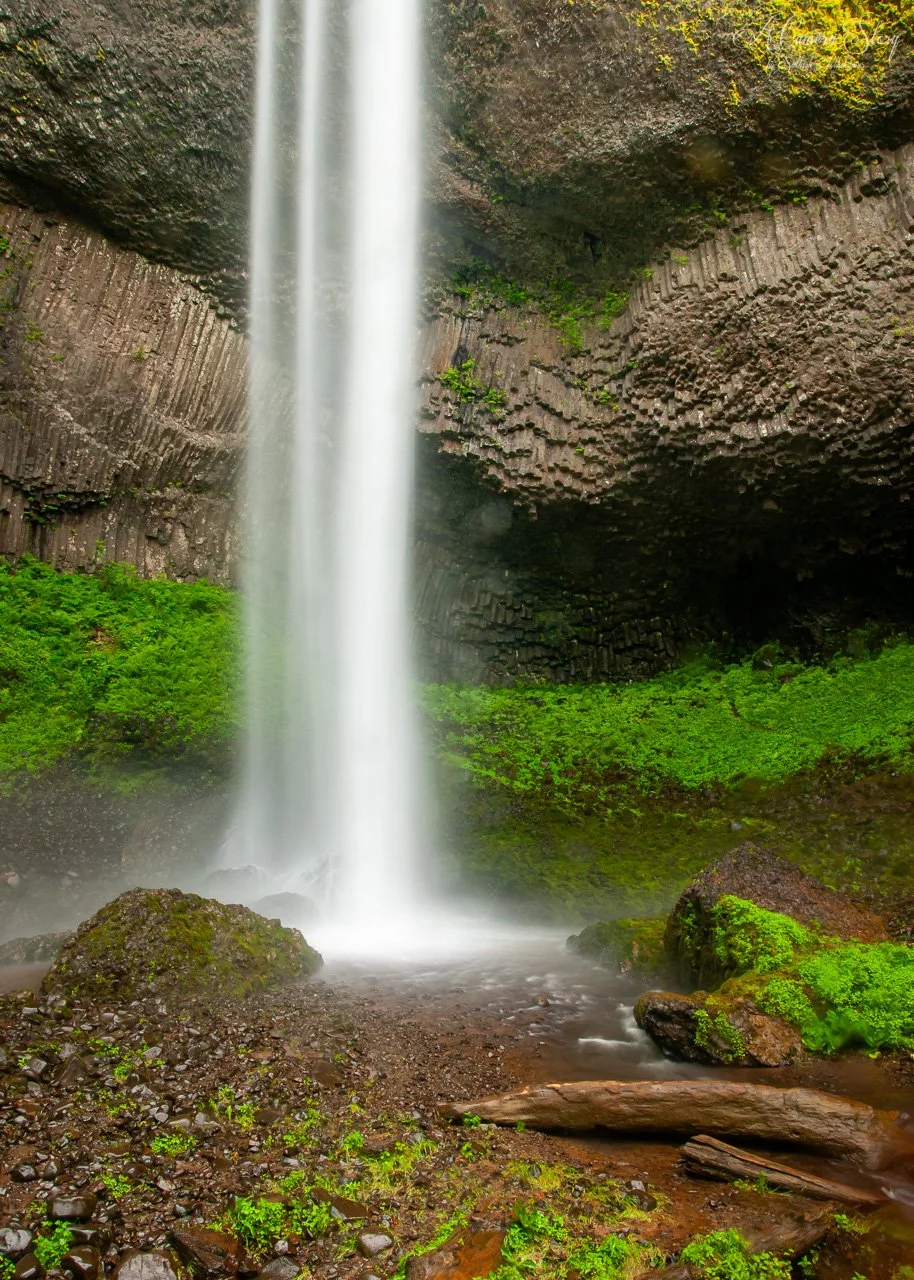
It had been ages since I had been to the waterfall, but the moment I entered the glade where the waterfall was nestled in, memories started flooding in: a tall column of stark white water set against the dark and sinuous basalt columns, a gushing creek flowing under a mossy wooden bridge, surrounded by the fresh greenery of spring. I still remembered the refreshing scent of petrichor, the ice-cold spray from the fall, and the thunderous roar echoing through the canyon.

Such was the impact of this lovely waterfall along the Columbia River

Columbia River Gorge
OR USA

The Misty Woods

Visiting the Columbia Gorge in the midst of a thunderstorm means that not only are you going to get pelted by rain, but you also get the occasional bouts of sunlight. And that light can add an ethereal and primeval feel to the waterfalls of the canyon. This was one of those waterfalls gushing from the recent rain-showers of April

Columbia River Gorge
OR USA

Leaning Away

Visiting tulip fields is aboud admiring the the rows and rows of neatly planted tulips, in all shades from brilliant whites to deep purple. But not all end up blooming successfully, and add a bit of variety to the monotony of the parallel lines of tulips

Wooden Shoe Tulip Farm
OR USA

A Fallen Rose

From above, the tulip fields were geometrical patterns of straight lines of different colors: yellows, blues, whites, pinks and reds. Coupled with assortments of an agricultural life, these patterns were interesting to photograph.
But down below, the compositions and scenes were strikingly different. Gone were the patterns where details were lost. Instead, I tried to focus on the minutiae, and on the uncommon occurrence.

Woodburn
OR USA