Shades of Fall

Its officially fall in the Pacific Northwest. After a long spring where the average temperature slowly meanders up, and a blissful long summer where the mountains showcase all their splendor, the mercury drops in a matter of a few weeks in the mountains as the weather becomes wetter thanks to the storms from the Pacific. The vegetation responds to the changes in weather rather dramatically, as short brush in the high-alpine terrain turn to a scarlet red, while the larches in the drier reaches of the PNW switch to gold. And before long, they are replaced by a coat of white as winter sets in the mountains. All within a span of 4-6 weeks.

Naturally, it is one of the best times to be out there to capture this dramatic change in colors. Here are a few examples from the North Cascades range.

Mt Baker Wilderness

WA USA

Timeless outdoors

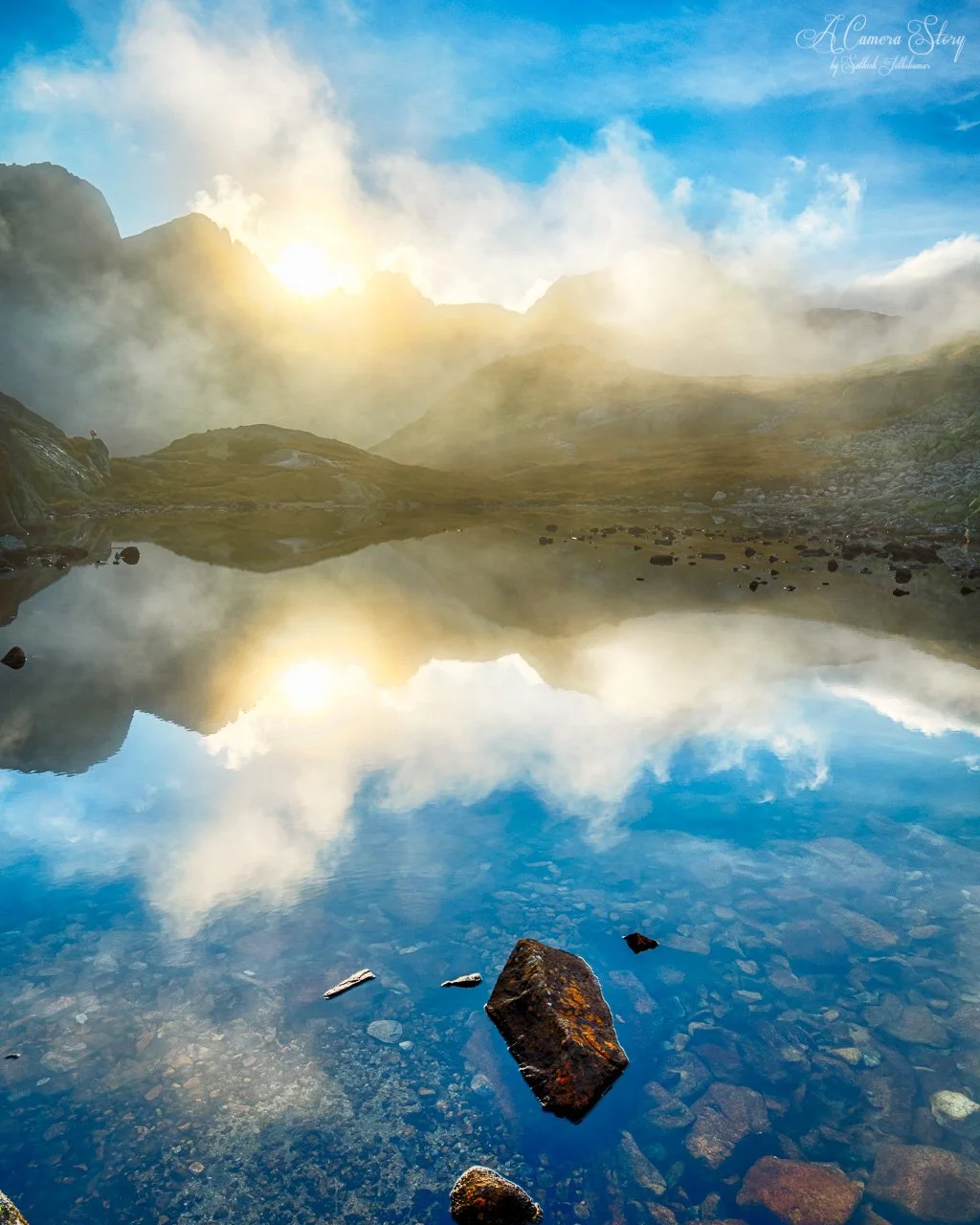
After a tiring hike in the mountains, the sight of this glistening blue lake spread across the landscape was a welcome sight for my sore eyes. I immediately made my way to the shore, dipping into the cool waters to relax my worn out legs. And I sat there on the shore, enjoying a bit of warm sunshine while watching the shallow waves slowly come ashore, and listening to the gentle rustling of trees.

I could not have thought of a better way to spend the afternoon than being here.

Lake Bohinj
Slovenia

Gold and Blue

While I prefer to shoot landscapes and intimate details in nature, there are times when I indulge in cityscapes and street photography. This is especially true while in the medieval towns and cities in Europe where they take effort to aesthetically light up the buildings to highlight the architecture.

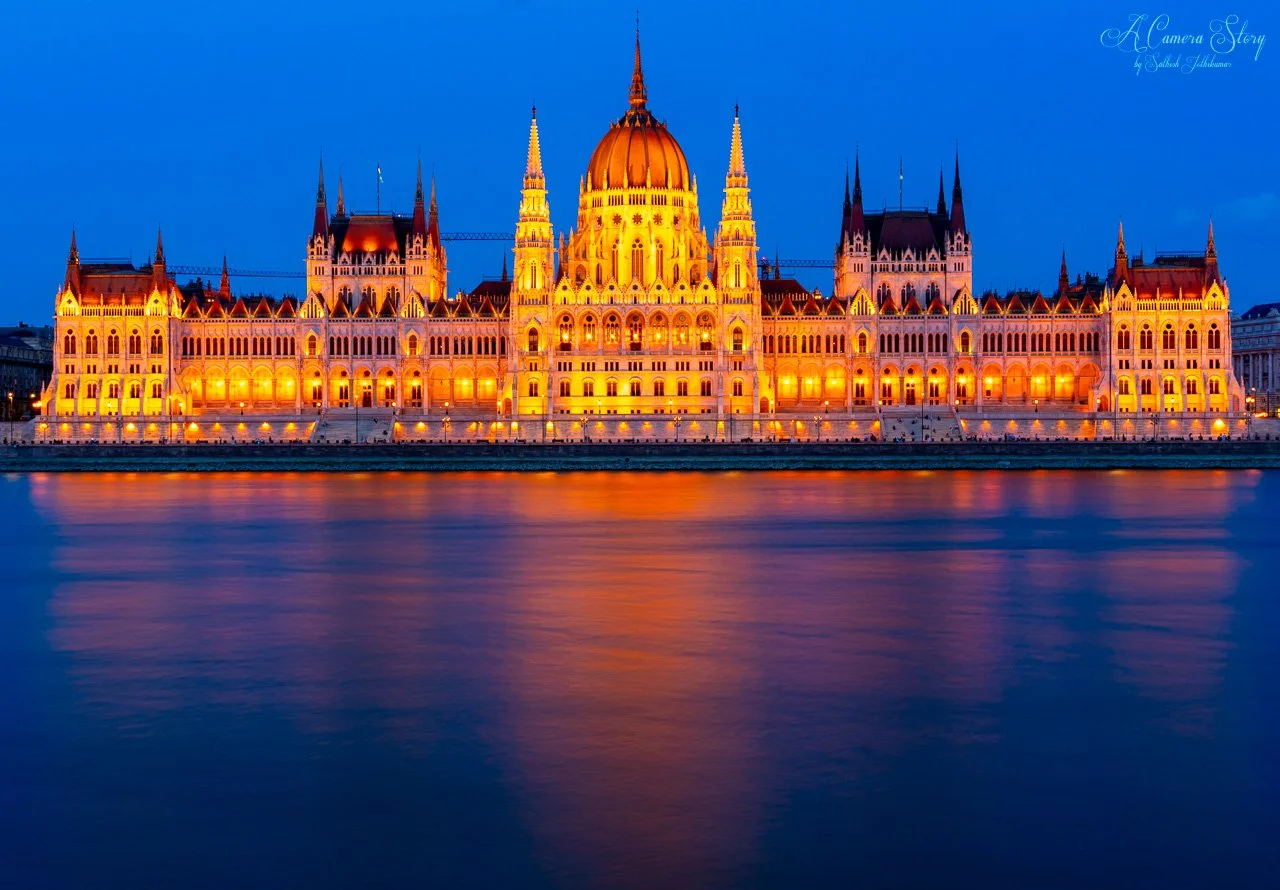
Twilight at the Budapest Parliament, Hungary

Twilight, or blue hour as it is often colloquially called by photographers, is often the perfect time to capture the lighting aesthetics. The deep blue of the twilight sky and the brilliant orange from the sodium vapor lighting often exist in perfect harmony for a few valuable minutes at dawn and dusk that I often try to prioritize and work my evening itinerary around these golden minutes.

The medieval core of Cesky Krumlov, Czechia

Here are a couple of examples of blue hour images from Budapest (Hungary) and Cesky Krumlov (Czech Republic)

Smoky Layers

Landscape photography often challenges us to simplify complex scenes by carefully selecting key visual elements and controlling color and tonal range. In this image of Mt. Adams, shot from Mount Rainier, I focused on isolating the interlocking ridges to create a layered composition that emphasizes depth through atmospheric perspective.
The cool blue hues and gradual tonal shifts highlight the receding mountain layers, while the smoke from a nearby fire introduced additional haze, enhancing the sense of scale and distance through diffused light scattering. Typically, this effect is captured during the golden hours of early morning or late evening, but the smoke uniquely extended that window, adding mood and texture to the frame.
It’s a reminder of how environmental conditions can become creative tools in landscape photography.

Mount Rainier National Park
WA USA

After the rain

It is not always possible to predict the weather down to the minute when planning weeks out. Often, one has to go with the flow, and adjust to the ongoing conditions. I experienced this during a recent hike in the Tatras in Slovakia. 24hrs of continuous rain was followed by some of the most atmospheric lighting that I had experienced in the mountains thus far. As water evaporated from the wet rocks, they caught the last rays of afternoon light, glowing in an explosion of light and colors. It didn't last very long, and I was fortunate that I was at the right place at the right time.

Tatras National Park
Slovakia

Midsummer's eve

The summer solstice just passed by us. The longest day of the year (in the northern hemisphere) is marked by celebrations across the world. 
And for the Pacific Northwest, it marked the beginning of summer. 

For me, the solstice heralds the beginning of not only the backpacking season in the Cascades, but also of warm summer evenings spent outdoors, watching nature and nurture blossoming in a beautiful symphony. Here are three scenes that epitomizes summer in the city.

Seattle
WA USA

Olympic Spring

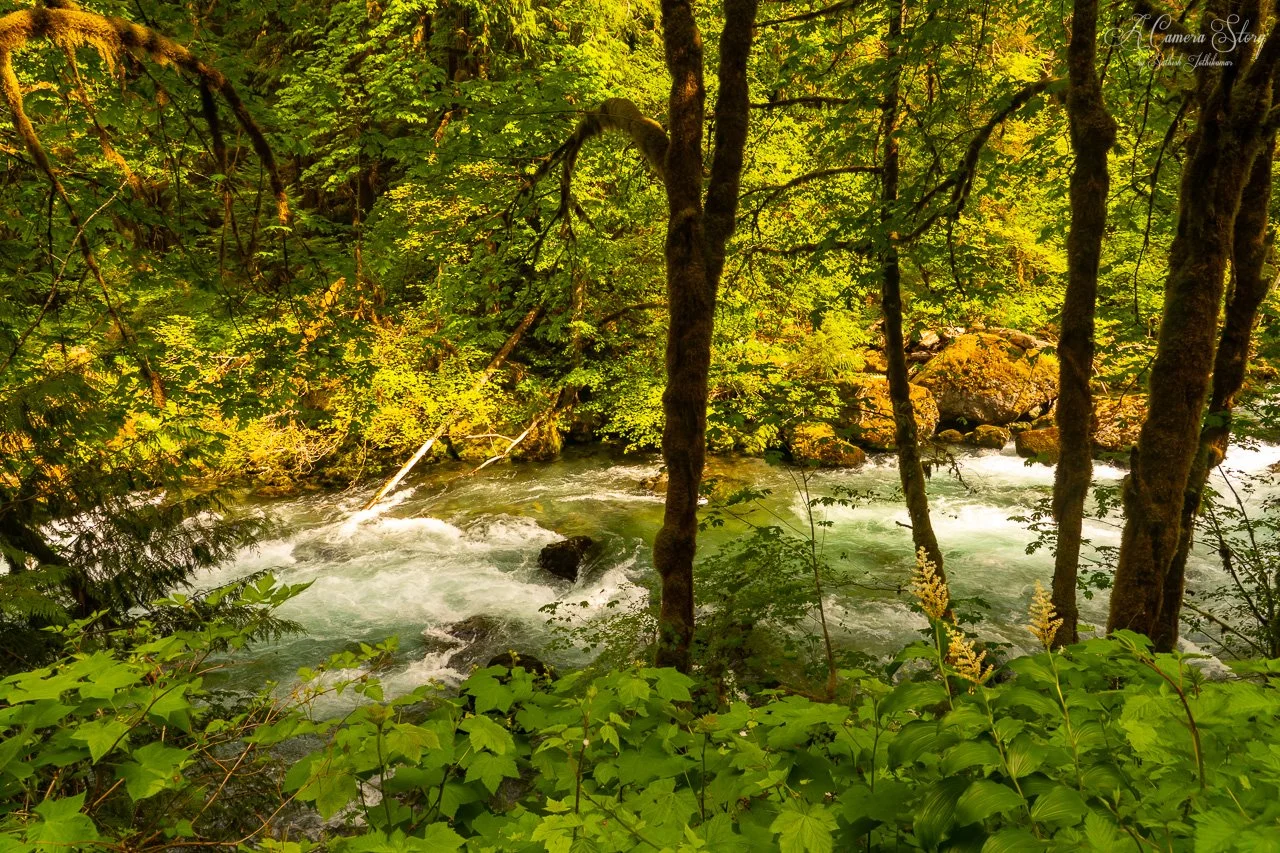
Deep in the valleys of the Olympic peninsula lay enchanted forests where towering trees stand stalwarts to a rich emerald green undergrowth. These forests, which enjoy abundant rainfall, are home to a labyrinth of winding paths that invited hikers to explore serene beauty of nature's untouched splendor. Moss drapes over fallen logs like velvet, ferns unfurl in the cool mist, and the filtered light weaves a dreamscape of greens. Every step into this realm feels like crossing into a timeless sanctuary of an ancient land.

I got to explore this enchanted land earlier this year during its peak spring growth. Decades ago, this campground was a more developed establishment that has since then been slowly taken over by nature.

Olympic National Park
WA USA

Spring in the Palouse

The Palouse region of eastern Washington is a striking landscape of rolling hills, shaped by a unique climate in the rain shadow of the Cascades. While the western Pacific Northwest stays lush and green, this drier area is ideal for growing legumes, grains, and oilseeds.

From higher vantage points, you can see the vast farmland stretching out, marked by silos, barns, and intersecting roads. On a clear spring day, the blue sky is filled with white clouds, creating a strong contrast with the green fields below.

Much of the native vegetation has been replaced by agriculture, but small pockets remain along creeks and atop the buttes that rise above the region. If you visit now, you’ll get to experience this seasonal transformation firsthand.
Palouse, WA, USA

After the Storm

The Pacific Northwest region of the US is slowly marching through spring and easing into the summer. The days are starting to get longer and warmer. Flowers are starting to bloom everywhere, adding a dash of color to the already lush green landscape. In a span of about 6 weeks, summer would officially begin out here, and would last for 3 months.

However, in the mountains, the duration of each season and the transition between each is much shorter. Above 6000ft, winter conditions last for more than half a year, and the other seasons of spring, summer and autumn cycle through in rapid succession in the remaining 5 months. It is this condensed cycle that makes the summer in the Pacific Northwest ever so precious - because there are just ever so few days to get out and enjoy the best of what the mountains have to offer.

Here are a few reminders of the dramatic mountain landscape that one can witness in its summer that barely lasts 8 weeks.

Mount Baker Snoqualmie National Forest
WA USA

Vortex in the Sky

The night of May 11, 2024 was one for the books. One of the strongest train of Coronal Mass Ejection (CME) events hit the magnetosphere of the Earth, repeatedly plucking the planet's magnetic field like guitar strings. This resulting release of energy led to one of the strongest and longest shows, with the aurora visible all the way down to the low latitudes.

Out in the Pacific Northwest, we were blessed to have it coincide with excellent viewing conditions. As dusk turned to twilight, the anticipation in the crowd gathered around grew. Soon, the faint glow became visible above us, a green band extending east to west. The glow was still dim thanks to the moonlight. But once the moon set, the substorms started hitting, and all the graphs started spiking. And the sky glowed with the brilliance of the lights.

Curtains of light twirled above the horizon. But up above, the aurora danced like a vortex of celestial energy, ribbons of light unfurling in the cold night sky. The ribbons pulsed and weaved, forming and reforming a thousand different shapes with every sub-storm that day

I will never forget the exhilaration I felt in that moment. I hope these memories will last a lifetime.

Baker Lake
WA USA